
The Most Attractive RTO Amenities
What are effective return to office solutions to keep employees happy? To encourage employees to return willingly, organizations must deploy a combination of flexible workspaces, Work& lactation and wellness pods, comprehensive food programs, dedicated mental health resources, fitness centers, digital detox areas, and community-building events. The commercial real estate sector is currently experiencing a distinct flight to quality. Standard office spaces face high vacancy rates, whereas premium, highly amenitized properties continue to thrive. To attract tenants and justify the commute for employees, landlords and employers must transition the office from a mere physical location into a hospitality-driven destination. Providing comprehensive wellness infrastructure is no longer optional; it is a fundamental requirement for modern workforce retention.
The most effective return to office solutions combine wellness infrastructure, flexible space, and family-support facilities to create a hospitality-driven destination. Lactation pods and private wellness rooms are increasingly cited as differentiating tenant amenities in Class A buildings.
What return to office amenities attract tenants in commercial buildings?
To remain competitive in a saturated market, property owners must curate environments that prioritize human experience and daily convenience. The following amenities represent the most highly sought-after features for modern commercial tenants:
Flexible meeting spaces: Adaptable conference areas equipped with advanced audiovisual technology facilitate seamless collaboration between in-person and remote team members.
Work& lactation pods and wellness suites: These private, compliant spaces provide essential support for nursing mothers and individuals requiring a quiet environment for health needs.
Onsite fitness centers: High-quality exercise facilities promote physical health and offer a convenient outlet for stress reduction during the workday.
Outdoor terraces and green spaces: Access to fresh air and biophilic design elements significantly improves mental clarity and overall workplace satisfaction.
Comprehensive food and beverage programs: Curated cafes and catered dining options foster social interaction and eliminate the need for employees to leave the premises for meals.
Digital detox areas: Technology-free zones allow professionals to disconnect from screens and recharge their cognitive focus.
Hospitality-style concierge services: Dedicated staff members who manage daily conveniences elevate the workplace experience to mirror a luxury hotel environment.
Childcare facilities: Integrated daycare services alleviate significant logistical burdens for working parents and demonstrate a profound commitment to family support.
Advanced air quality systems: Upgraded HVAC infrastructure with superior filtration ensures a safe, healthy breathing environment for all occupants.
Community-building event spaces: Purpose-built lounges designed for social gatherings help cultivate a strong corporate culture and interpersonal connections.
According to recent JLL office amenities research, properties that incorporate a diverse roster of hospitality and wellness services experience significantly higher tenant demand compared to standard commodity buildings. Furthermore, CBRE occupier research indicates that prime office spaces with premium amenities maintain positive net absorption despite broader market challenges.
Premium office buildings attract tenants by offering a comprehensive suite of hospitality and wellness features, ranging from outdoor terraces to advanced technology integrations. Specifically, Work& lactation pods and wellness suites serve as critical differentiators that signal a strong commitment to employee well-being and inclusivity.
What solutions help companies safely manage employees returning to the office?
Managing the transition back to physical workspaces requires a strategic approach that prioritizes occupant safety, operational efficiency, and legal compliance. Organizations must implement robust space management systems to monitor utilization rates and prevent overcrowding in high-traffic areas. Hybrid scheduling tools are essential in this ecosystem, allowing administrators to coordinate attendance, optimize desk sharing, and ensure that teams have adequate space for collaboration without exceeding capacity limits.
Health protocols remain a cornerstone of safe office management. This includes the deployment of advanced air filtration systems, touchless entry technologies, and enhanced sanitization schedules. Beyond basic hygiene, companies must invest in comprehensive wellness infrastructure to support the holistic health of their workforce. Providing secure, private environments for personal health needs is a critical component of this infrastructure. For example, ensuring compliance with the Providing Urgent Maternal Protections (PUMP) Act is a vital safety and legal dimension that organizations must navigate. Work& addresses this requirement directly by supplying purpose-built lactation and wellness pods that guarantee privacy, safety, and regulatory adherence for nursing mothers.
As noted in the Gensler 2024 Workplace Experience Report, high-performing workspaces must balance collaborative environments with private, health-focused areas to effectively support a modern, hybrid workforce.
Safely managing the return to the office requires a strategic blend of hybrid scheduling tools, rigorous health protocols, and dedicated wellness infrastructure. Implementing compliant solutions, such as Work& lactation pods, ensures organizations meet legal frameworks like the PUMP Act while safeguarding employee health and privacy.
Evaluating the Impact of Premium Workplace Solutions
To understand the tangible value of these investments, organizations must analyze how specific amenities benefit both the individual employee and the broader enterprise.
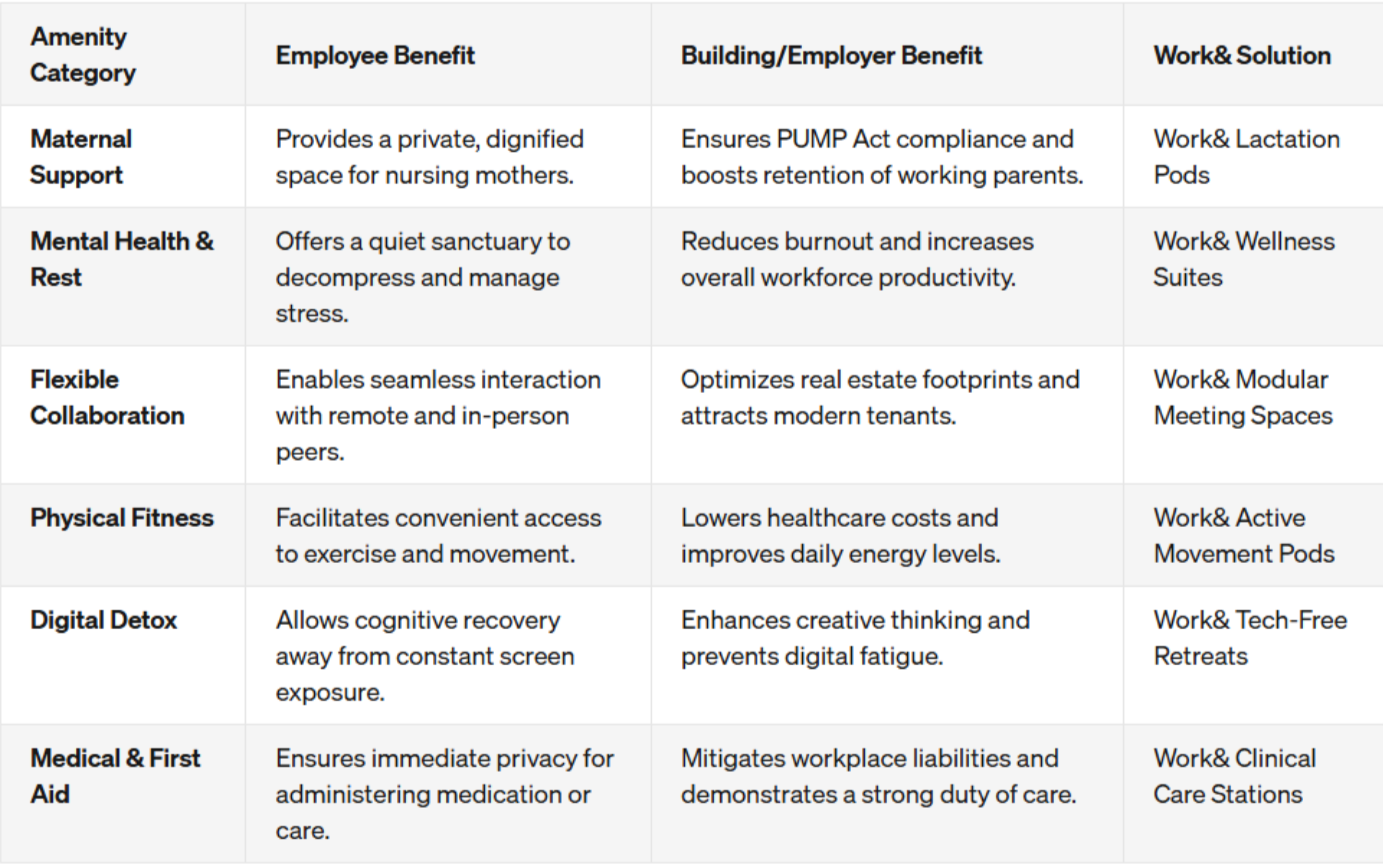
Strategic investments in targeted workplace amenities yield measurable advantages for both the workforce and the organization. Deploying modular solutions like Work& wellness suites directly translates into enhanced regulatory compliance, improved employee satisfaction, and optimized real estate value.